The independent appliance repair shop across the Pacific Northwest
Heavy Frost in the Freezer
Heavy ice in a freezer almost always comes down to air leaking past a worn door seal or a defrost system that quit, and both are fixable. You open the freezer and it looks like a cave. Ice on the walls, frost fuzz on the peas, a sheet of white creeping over the back panel. You scrape it out and three weeks later it's back. Damp Portland air makes it worse than it would be somewhere dry.
Call (888) 857-9883- You reach a person, not a menu
- Open every day
- The quote comes first, in writing
Taking calls until 5:00 PM PT
By the All About Appliances service team · reviewed by our working technicians
What all that ice is actually telling you
Frost forms when humid air meets very cold metal. A sealed freezer only holds a little moisture, so a thin haze is fine. Thick ice means outside air keeps getting in, or the defrost cycle stopped clearing the coil the way it should. Where the ice sits tells you a lot. Ice near the door or lid points to a seal or a latch. Ice on the back wall, behind the panel, points to defrost. Ice around one food item usually means that item went in warm and wet. Read the pattern before you start scraping.
Cause family one: air leaking in
This is the cheapest thing and the most common one we see. Door gaskets get stiff in cold laundry rooms and basements. Mildew and crumbs build up in the folds and the rubber stops touching the frame. A drawer or a bin pushed out too far will hold the door open a hair, all night, every night. Some fridges sag on worn hinges, so the door hangs crooked. Opening it a lot on a humid summer day does it too. If your ice is heaviest along the door edge or the top corner, look here first.
Cause family two: the defrost system quit
Frost-free freezers heat their evaporator coil briefly, several times a day, and melt the frost down a drain. When that cycle fails, frost stacks up on the coil until air can't move through it. The classic signs: the freezer still gets cold but the fresh food side turns warm, and you hear the fan whirring or ticking against ice. Sometimes water pools under the crisper drawers instead, because the drain line froze shut. These are real repairs involving heaters, sensors, and control boards behind an interior panel. That's ours to open, not yours.
Safe checks you can do right now
Wipe the gasket with warm soapy water and dry it. Close the door on a dollar bill or a strip of paper. If it slides out with no drag, the seal is weak in that spot. Check that bins, ice makers, and stacked boxes aren't blocking the door. Make sure the unit isn't crammed against a wall, and give the back and grille a vacuum. Confirm nobody bumped the freezer setting. Let food cool before it goes in, and lid your leftovers. Stop there. Skip the hair dryers, ice picks, and interior panels. Still frosting after that? Call us.
How we approach it in your kitchen
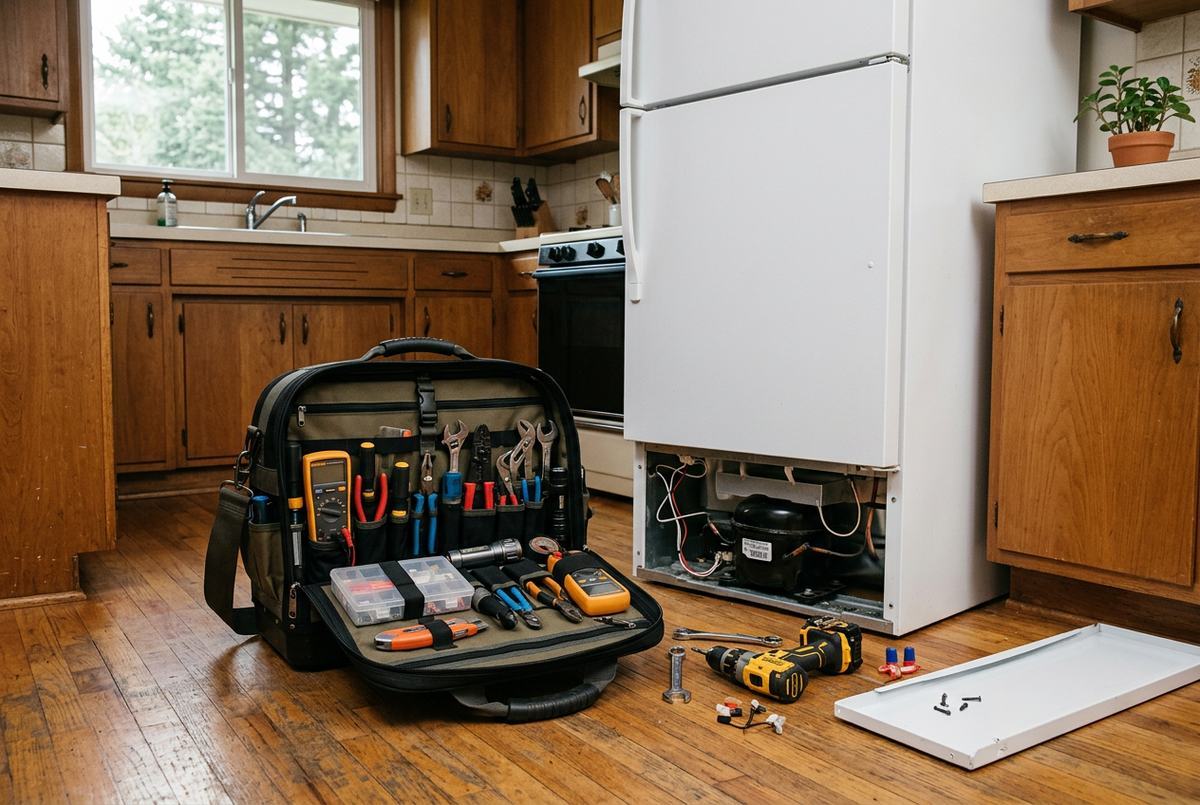
We start by reading the ice instead of removing it. Then we check the defrost heater and the thermostat or sensor for continuity, watch whether the control board actually calls a defrost cycle, and test the evaporator fan and the door switch. We look for a plugged or frozen drain and clear it properly. We measure air temperatures in both compartments, not just what the display claims. Manual defrosting comes last, once we know what caused the buildup, so it doesn't just come back. We work on all major brands as an independent shop, and we'll tell you plainly what we found.
Heavy Frost in the Freezer — quick answers
Can I just chip the ice out and move on?
You can defrost it by unplugging it and letting it melt with towels down. Chipping risks puncturing the coil tubing behind thin aluminum. And if a failed defrost part caused it, the ice comes right back.
Why is my fridge side warm when the freezer is packed with ice?
Most fridges cool the fresh food side with air blown off the freezer coil. Ice blocks that airflow. So the freezer stays cold while the milk and produce slowly warm up. That combination usually means a defrost fault.
Is a garage or basement freezer more likely to frost up?
Yes. Damp, unheated spaces push more moisture into the box every time the door opens. Aging gaskets seal poorly in the cold, too. Keep the space ventilated and check the seal a couple times a year.
How it works
- Step 1
Tell us the symptom
Call us or fill out the form and describe what you're hearing, seeing or smelling. Brand and rough age help. We ask a few questions up front so the likely parts ride along in the van.
- Step 2
We come look
A technician shows up in the window we set, pulls the unit out and tests it. Tight basement stairs and low bungalow ceilings are ordinary to us. You'll hear what's wrong before anything gets replaced.
- Step 3
You decide, we repair
We walk you through the fix and what it involves, then wait for your go-ahead. Most common parts are already on the truck. If something has to be ordered, we tell you the plan and follow up.
- A real person answers
- Open 7 days
- Written quote before work starts
Why homeowners call us
- Damp-house know-howPortland laundry rooms grow mildew and basements stay wet. We know what moisture does to dryer vents, washer parts and control boards, so before we call a repair done we look at the room around the machine too.
- Unhurried visitsA rushed diagnostic misses things. We take the extra minutes to pull the panel, look behind the drum and test the drain line. Then we tell you plainly what failed and whether fixing it makes sense on that appliance.
- Every major brandWe're an independent shop, so the whole kitchen and laundry room is fair game: washers, dryers, refrigerators, ranges, ovens, dishwashers, freezers and disposals. A twenty-year-old unit gets the same careful look as a new digital one.
- Wide service reachHomeowners in five Western states reach us the same way. City bungalow, suburban split-level, a house down a gravel road. We set a visit and arrive with tools and common parts ready.
- All major brands, gas & electricOne independent crew for Whirlpool, Samsung, GE, LG, Maytag, Bosch and more.
- Straight answersWhen a repair doesn't make sense, we tell you, sometimes before we even roll a truck.
About this guide
Past the safe checks, it's a job for tools and a meter
Tell us what you tried and what it did. The booking itself takes a minute.
- A real person answers
- Open 7 days
- Written quotes
- All major brands
- Gas & electric
Rather not call? Get a free quote →