The independent appliance repair shop across the Pacific Northwest
The Coil-Cleaning Habit That Saves Refrigerators
If your refrigerator runs longer than it used to and the ice cream has gone soft, start by cleaning the condenser coils underneath or behind it. That is where we find the problem in most Portland kitchens, a gray mat of dust and pet hair packed tight against the coils. The kitchen feels warm along that side of the cabinet. Nothing has broken yet, but the fridge is telling you something.
Call (888) 857-9883- You reach a person, not a menu
- Open every day
- The quote comes first, in writing
Taking calls until 5:00 PM PT
By the All About Appliances service team · reviewed by our working technicians
What dust on the coils actually does
Coils shed heat, and that is their whole job. Refrigerant leaves the compressor hot, moves through the coils, and air passing over them carries the heat off. Cover those coils with lint and dog hair and the heat has nowhere to go. So the compressor runs longer, then it runs almost constantly. It gets hotter than it was built to get, and the fan motor strains to push air through a clogged mat. This does not fail overnight. It grinds along for a year or two, then a compressor or a start component quits on a hot August afternoon with a full freezer.
The five-minute habit
Unplug the refrigerator first. Every time. Look for a grille at the very bottom front, or pull the fridge out and look at the back. Most newer units keep the coils underneath, behind that low kick panel that snaps or unscrews off from the front. That panel is fair game for a homeowner. Nothing inside the sealed system is. Use a coil brush and a vacuum with a crevice tool. Brush loose, vacuum up, repeat. Get the fan area and the floor under it too. Snap the grille back, plug it in, done. No tools beyond a screwdriver, and no reason to open anything else.
How often, honestly
Twice a year covers most kitchens. We tell folks to tie it to the time change so they remember. If you have a shedding dog or cat, make it four times a year. Same if the fridge sits on carpet, or in a basement or garage where dust settles heavy. Older Portland houses with forced air and floor registers push a lot of dust around at ankle height, right where the coils live. Worth checking after any remodel or sanding work, too. Drywall dust packs into coils like felt and it does not shake loose on its own.
Signs prevention is already behind you
Listen and feel. A compressor that never seems to shut off is one sign, along with sides or a back panel that are hot instead of warm. Maybe the freezer holds fine but the fresh food side creeps up, or there is condensation on the shelves. A fan that rattles or stops and starts counts too. Ice cream that stays soft on the coldest setting means the system has been fighting for a while. Clean the coils anyway, it will not hurt, and give it a full day. If nothing improves, or if the fridge clicks and hums and shuts off after a few seconds, stop there and call us. That pattern points at parts we should handle.
What we check when we come out
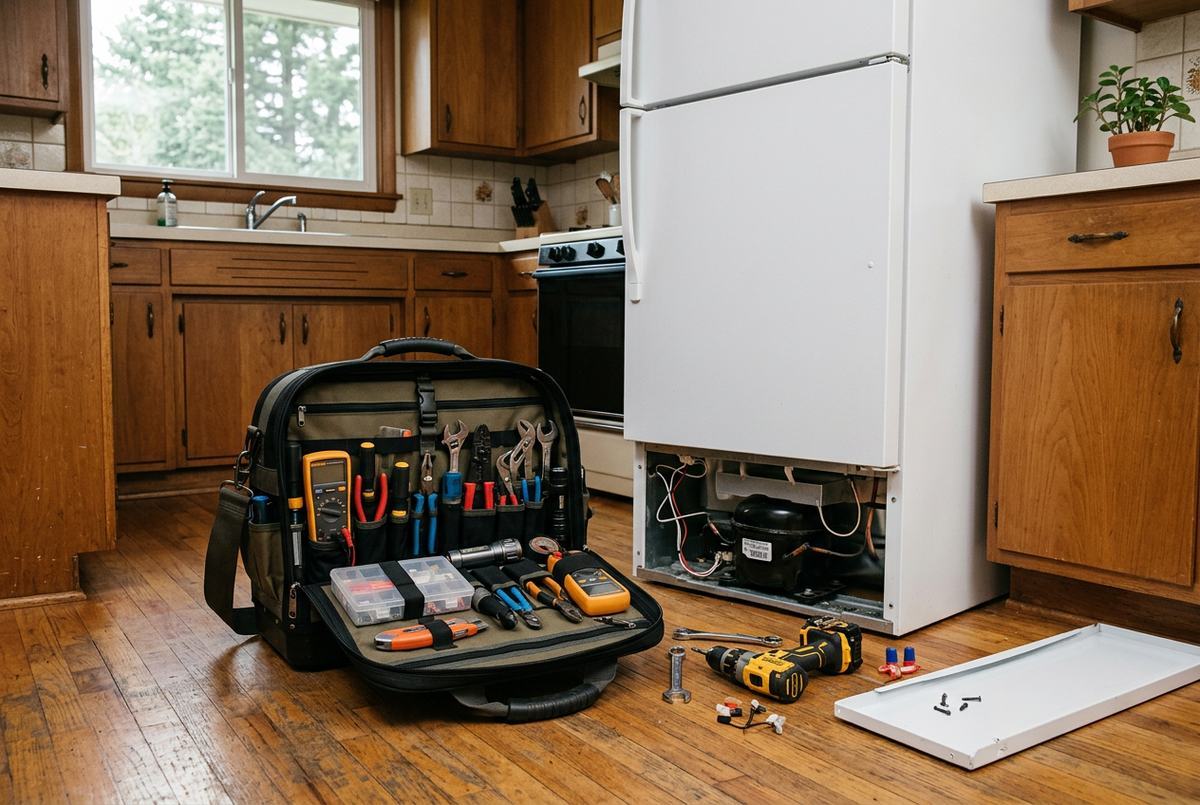
We start where you started, at the coils, because we want to know what the fridge has been enduring. Then we read temperatures in both compartments, check the condenser fan and evaporator fan, look at the defrost cycle, and test the door seals with a dollar-bill drag. Ice buildup on the back wall of the freezer tells us one story. A clean coil with a hot compressor tells us another. We explain what we find in plain words before anything gets replaced, and we tell you honestly when a repair makes sense and when it does not. Call us and we will get you on the schedule.
The Coil-Cleaning Habit That Saves Refrigerators — quick answers
Can I just vacuum the coils without moving the fridge?
Often yes. If your coils are underneath, pop off the bottom front grille and work through there with a coil brush and crevice tool. Unplug first. Pull the unit out only if the coils sit on the back.
Will cleaning the coils fix a fridge that is already too warm?
Sometimes. If dirty coils were the only problem, temperatures usually recover within a day. If it still runs warm after that, something else is going on and it needs a look.
Do fridges with hidden coils still need cleaning?
Yes. Sealed-bottom designs collect less, but dust still reaches the fan and the underside. Vacuum the grille area and the floor beneath a couple times a year, and keep a few inches of clearance behind the cabinet.
How it works
- Step 1
Tell us the symptom
Call us or fill out the form and describe what you're hearing, seeing or smelling. Brand and rough age help. We ask a few questions up front so the likely parts ride along in the van.
- Step 2
We come look
A technician shows up in the window we set, pulls the unit out and tests it. Tight basement stairs and low bungalow ceilings are ordinary to us. You'll hear what's wrong before anything gets replaced.
- Step 3
You decide, we repair
We walk you through the fix and what it involves, then wait for your go-ahead. Most common parts are already on the truck. If something has to be ordered, we tell you the plan and follow up.
- A real person answers
- Open 7 days
- Written quote before work starts
Why homeowners call us
- Damp-house know-howPortland laundry rooms grow mildew and basements stay wet. We know what moisture does to dryer vents, washer parts and control boards, so before we call a repair done we look at the room around the machine too.
- Unhurried visitsA rushed diagnostic misses things. We take the extra minutes to pull the panel, look behind the drum and test the drain line. Then we tell you plainly what failed and whether fixing it makes sense on that appliance.
- Every major brandWe're an independent shop, so the whole kitchen and laundry room is fair game: washers, dryers, refrigerators, ranges, ovens, dishwashers, freezers and disposals. A twenty-year-old unit gets the same careful look as a new digital one.
- Wide service reachHomeowners in five Western states reach us the same way. City bungalow, suburban split-level, a house down a gravel road. We set a visit and arrive with tools and common parts ready.
- All major brands, gas & electricOne independent crew for Whirlpool, Samsung, GE, LG, Maytag, Bosch and more.
- Straight answersWhen a repair doesn't make sense, we tell you, sometimes before we even roll a truck.
About this guide
When the easy checks change nothing, it's time for a tech
Bring your notes from the checks to the call and booking takes no time.
- A real person answers
- Open 7 days
- Written quotes
- All major brands
- Gas & electric
Rather not call? Get a free quote →